

In DevTune's testing before release, the check flagged 0.6% of the checkable claims AI answers made about a brand, about 1 in 160, as contradicting the brand's own site.
We checked claims from fresh AI answers against each brand's own site. About 49% were checkable facts. The rest were opinions, comparisons or sentences only listing the brand.
Two independent reviewers then checked the contradictions against each brand's site without seeing the check's verdict. Their labels confirmed 85% of the groups of contradictions. We then checked the groups they had marked true against each brand's site and ruled some of them false, including prices that didn't match the brand's pricing page. With those rulings, 95% were correct.
That check now runs as Accuracy for every project on an eligible plan. Beside it, Positioning shows which product AI answers credit with the qualities you want to be known for. Both are live today on Pro, Agency and Enterprise plans, in the app, the API and MCP.
Two questions citations can't answer
Citations and mentions tell you whether AI names you. They don't tell you two things a buyer comparing tools will act on:
- Positioning. When an answer calls a product "the easiest to set up" or "the best for regulated industries", is it talking about you or a competitor?
- Accuracy. When an answer states your price, a limit or an integration, is it true?
An answer can mention you, cite your docs and still credit a rival with the quality you lead on. It can also recommend you while quoting a price you retired last year.
Positioning
Positioning measures which product AI answers credit with each quality you want to own.
You write each quality as a short positioning statement, such as "the easiest to integrate" or "the best value for small teams". After every probe run, DevTune reads each relevant answer and records which product it singles out for each statement. That is your brand, one of your competitors, another product, several products, or nobody. An answer counts for a statement when it mentions you or a tracked competitor and its prompt has an intent the statement applies to.
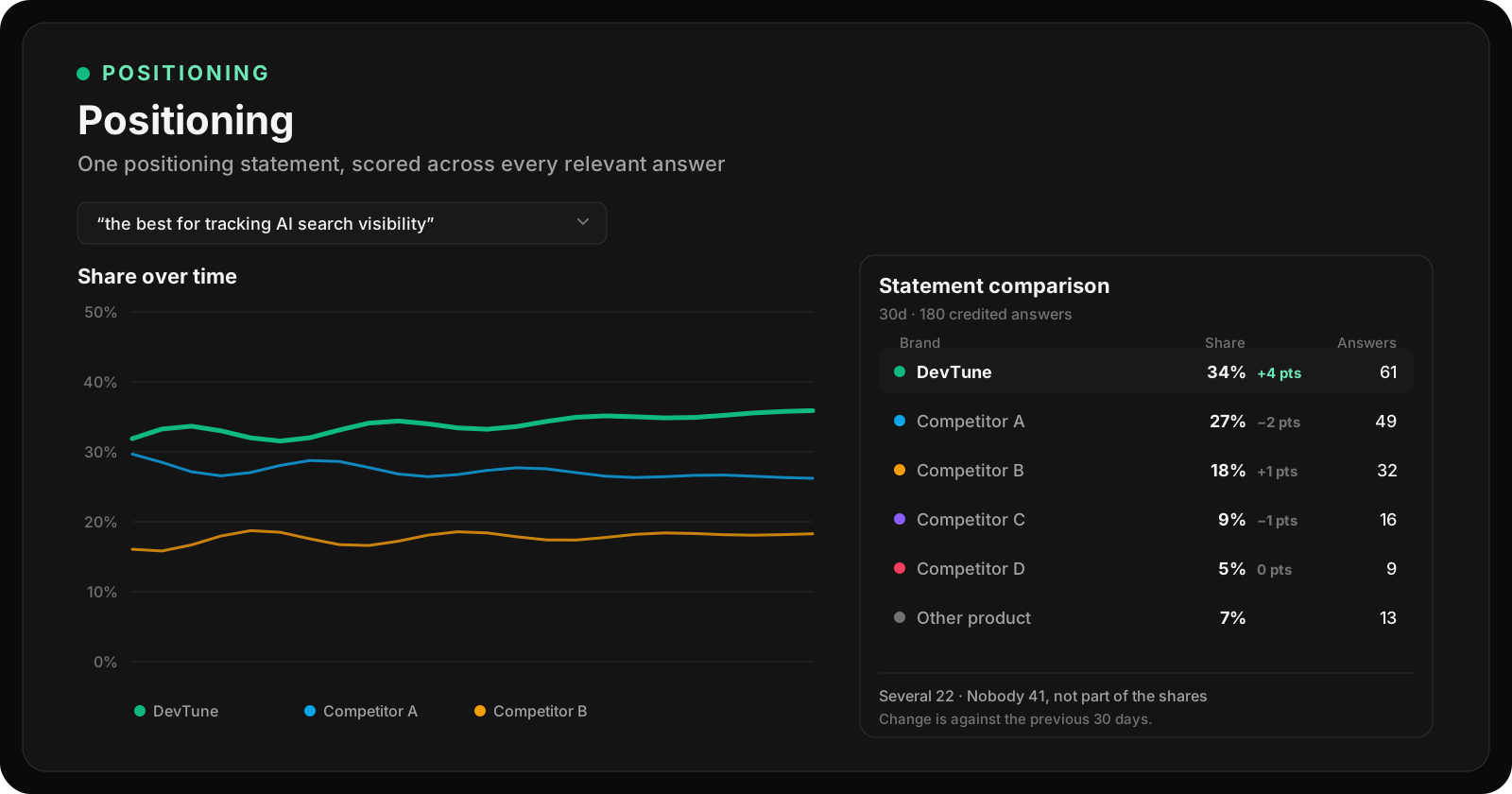
Share
Share is the answers crediting a product divided by the answers crediting any single product. Answers that give a statement to several products, or to nobody, are shown beside the shares but aren't part of them. A share needs at least 10 credited answers. Below that, you see the count without a percentage.
The Statement comparison table lists every product in your competitor set for the selected statement, with its share, its answer count and its change against the previous period of the same length. Select any count to open the answers behind it.
Shares compare you with up to five competitors. Choose them in Settings › Brands, under Positioning competitors. Changing the set starts a new comparison, and DevTune tells you how much comparable history the change cuts off before you save it.
Statements
Select Manage statements to add, edit, approve, dismiss or archive statements. Suggest statements drafts up to ten from your saved company profile, and nothing is scored until you approve it. A new statement is also scored against recent answers DevTune still holds, so it usually has some history on day one.
Editing a statement that already has history starts a new statement and archives the old one with its history. A trend never mixes two different questions.
Accuracy
Accuracy checks the claims AI answers make about your product against your own site.
A claim is a fact an answer states about you: a price, a limit, an integration, a feature you have or lack. Every week, DevTune checks what AI says about you for each prompt and platform you track. It pulls out every fact an answer states about you and checks each one against the pages it has crawled on your site. AI repeats the same claims answer after answer, so a wrong one keeps showing up until you fix it. Opinions, claims about other products and sentences that only list you among others aren't checked.
Each checked claim ends in one outcome:
| Outcome | What it means |
|---|---|
| Match your site | A page on your site states what the claim says |
| Contradict your site | A page on your site says something different |
| Your pages disagree | One of your pages states the claim and another contradicts it |
| Not on your site | The check didn't find the claim on your pages. It may be missing, or false |
| Couldn't be judged | The check couldn't reach a confident verdict |
AI answers state the same fact in many words. DevTune groups the wordings of one fact, so each fact counts once however it's phrased.
Contradictions
Each row in Contradictions is a sentence on your site that AI answers contradict. When several claims contradict the same sentence, they share one row, so you see one thing to fix.
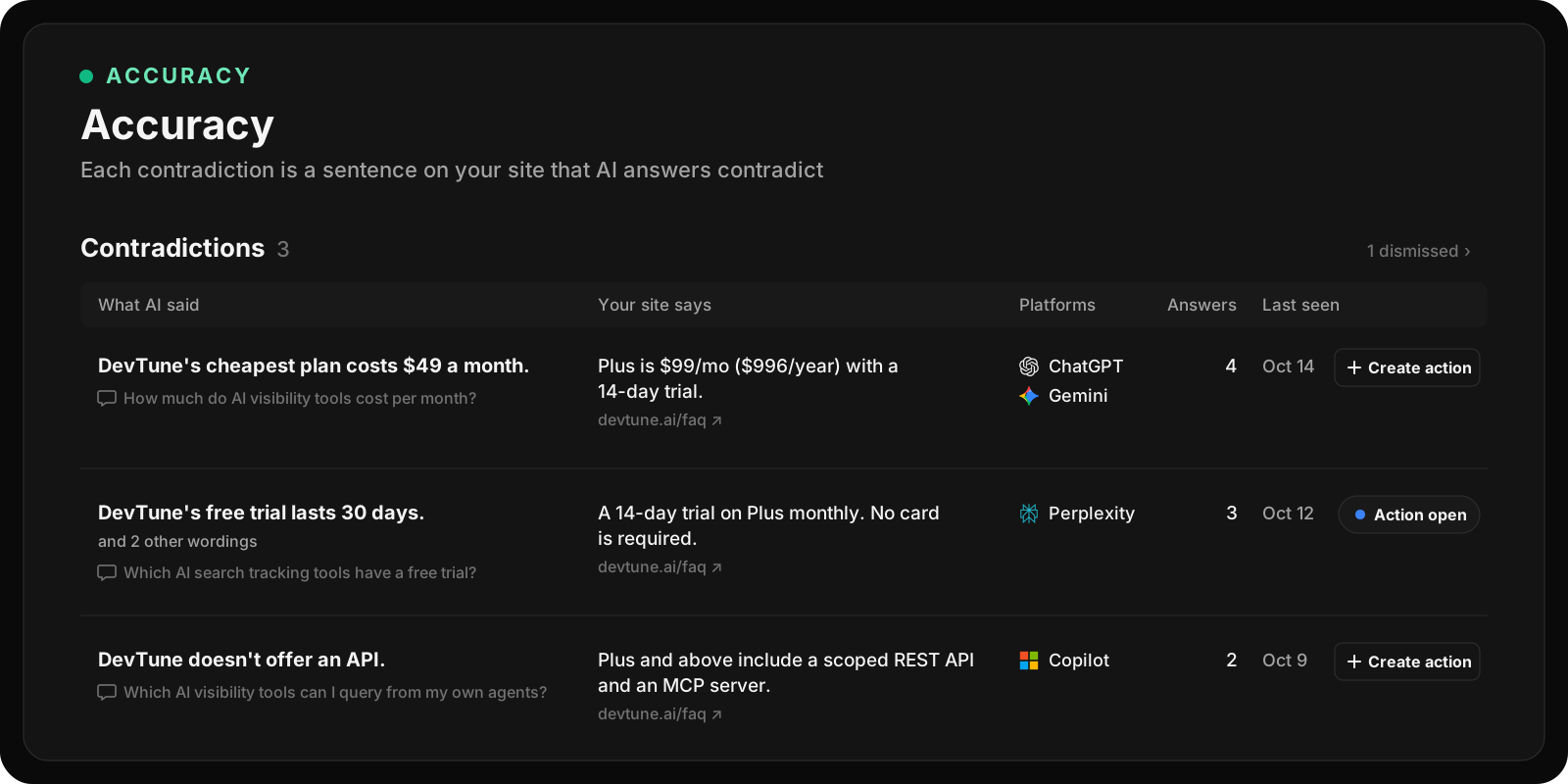
Select Create action to add a "Correct what AI says" action to Actions, with the claim, the sentence and the answers behind it. If the AI is right and the check is wrong, open the row and select Not a contradiction beside that wording. If an action is already open for the row, archive it in Actions first.
When a blog post or changelog on your site still states what the AI said, the claim stays a contradiction and the row names that page. Those pages describe what held when they were written.
Your pages disagree
Site conflicts lists claims where one of your pages states what the AI said and another contradicts it. Sometimes it's one page, with one price in one section and another price further down.
Open the row and choose which page is right. Saving creates a "Make these pages agree" action that targets the other page. If that page is locked, your answer is saved without an action, and you update the page yourself. If both are right because they describe different plans or periods, choose Both are right. That creates no action.
Not on your site
These are claims the check didn't find on any page it crawled. A claim here is either a true fact your site doesn't state yet, or a false one.
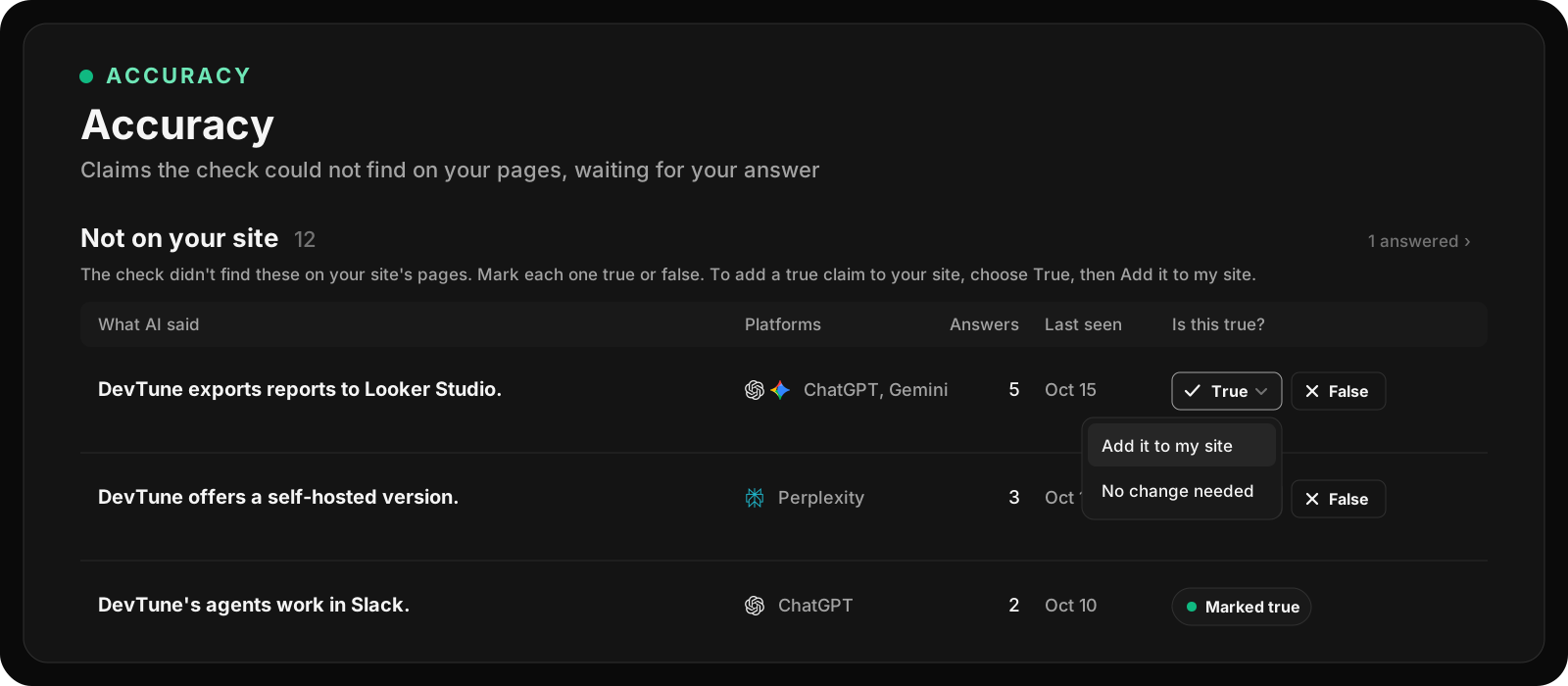
Answer each one in the Is this true? column:
- True, then Add it to my site when the claim is true and your site should say it. This creates an "Add to your site" action.
- True, then No change needed when the claim is true but not worth publishing, such as a list of competitors that names you. This creates no action.
- False when the claim is wrong. This creates a "Correct what AI says" action.
If an open action already covers the claim, your answer joins it instead of creating another.
Reviewed and Undo
Reviewed lists every decision your team makes, newest first, with its action and who made it. Select Undo to reverse one. The claim returns to its table, and you can decide again.
- If the decision created its action and nothing else rests on that action, Undo archives it.
- If other decisions rest on the action, it stays open for them.
- If the decision joined an open action, Undo removes it from that action.
When Undo would archive a live action, it's unavailable and the item says so. A live action is being measured in Results, and archiving it would end that measurement. If other decisions still rest on the live action, or the decision only joined it, Undo stays available and leaves the action open.
Locked pages
Accuracy actions steer around pages you've locked, and the tab tells you when they do. If a contradicted page is locked, the action targets another unlocked page that carries the claim, and the panel names it. If no unlocked page carries it, the panel says no action can be created.
Results
Actions from Accuracy are ordinary DevTune actions. Once you ship one, Results opens a before/after window on it, the same as any other measured action. The window shows what moved after the change. It doesn't show what caused it.
How often AI contradicted the brand
The figures in this post come from the pre-release evaluation of Accuracy on production answers in October 2026.
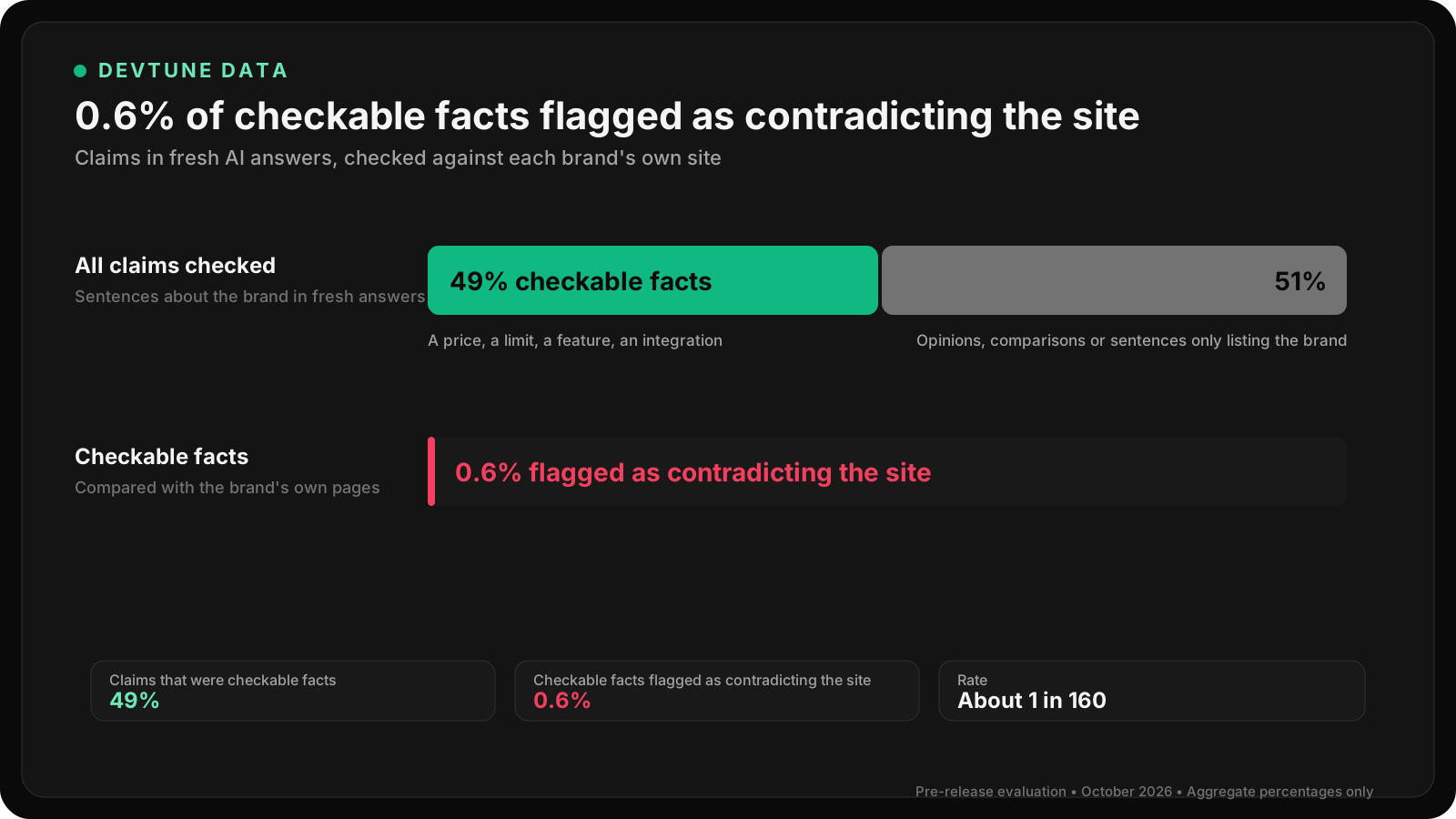
Claims in fresh AI answers, checked against each brand's own site. Aggregate percentages only.
Most sentences in AI answers about a brand aren't checkable facts. Only about 49% of the claims were. The rest were opinions, comparisons or sentences only listing the brand.
Of the checkable claims, the check flagged 0.6% as contradicting the brand's own site, about 1 in 160. The rate is low. It still matters when the wrong claim is a price, a limit or an integration that a buyer uses to compare tools, and at that rate you are unlikely to find it by reading answers yourself.
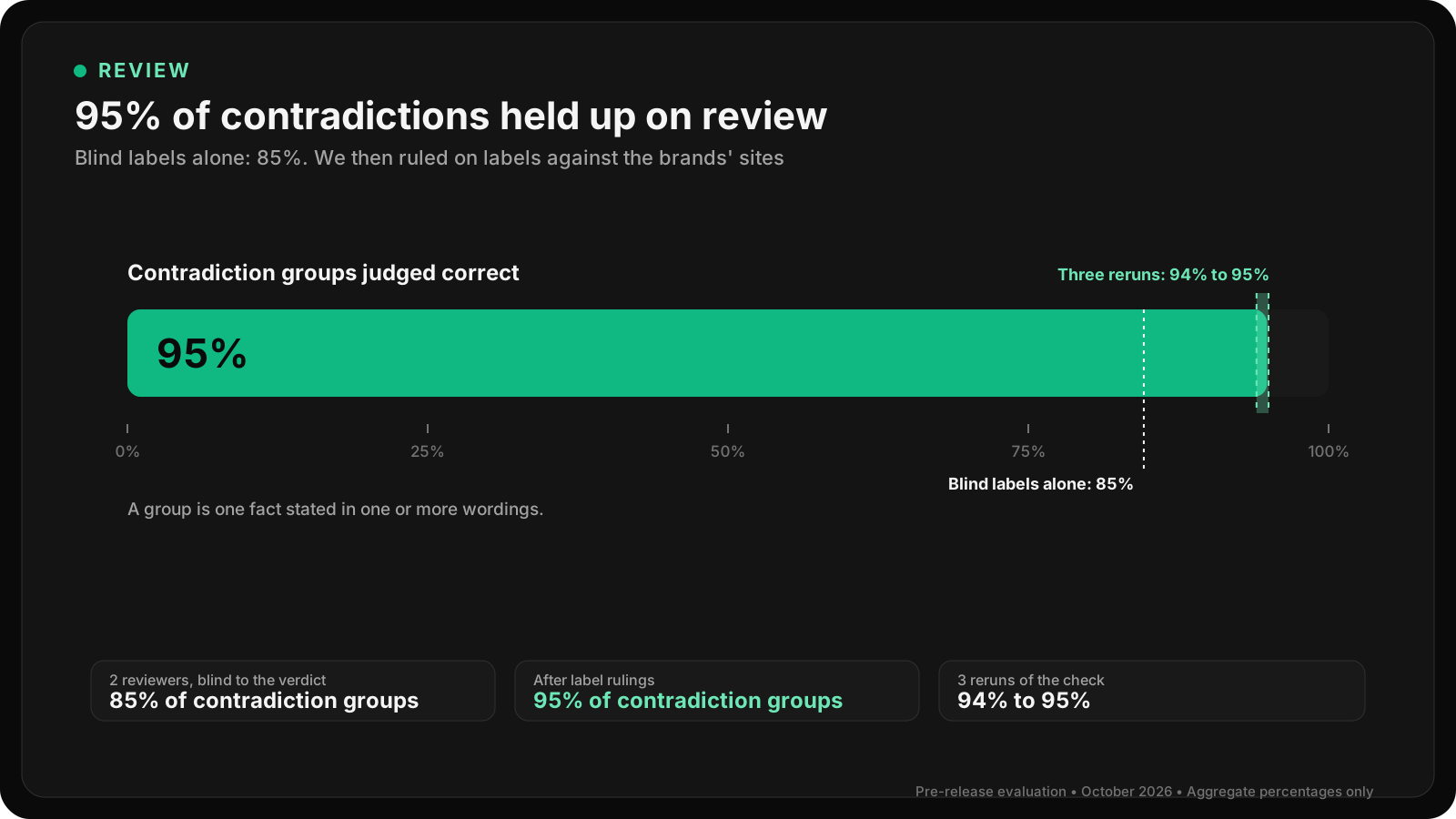
A group is one fact stated in one or more wordings.
Contradictions are grouped by fact, so several wordings of one fact form one group. Two independent reviewers checked each group against the brand's site, without seeing the check's verdict. Their labels confirmed 85% of the groups. We then checked the groups they had marked true against each brand's site and ruled some of them false, including prices that didn't match the brand's pricing page. That brought the figure to 95%. Across three reruns of the check, it was 94% to 95%.
What this means for marketing, growth and devrel teams
Each Accuracy outcome points to a different fix, and most of them start on your own site.
Fix the pages that disagree first
A site conflict is a problem you can resolve entirely on your own pages. Check first whether the two pages describe different plans or periods. If they do, both are right, so choose Both are right. If one page is out of date, choose the page that's right and correct the other, so your site gives one answer.
Answer the not-on-site claims
A true claim missing from your site is something buyers already hear about you, in words you didn't choose. Add it where it belongs. A false one needs a page that states the truth plainly.
Write statements in your buyers' words
Statements are matched against how AI answers describe products, and answers echo how buyers ask. "The easiest to embed" measures better than "the lowest-friction integration surface". Keep each statement to one quality that several products could plausibly win, and narrow it to the prompt intents where it applies. See Writing positioning statements.
Read both from your own tools
Your agents and scripts can read the same data over the REST API and MCP, read-only, with the positioning.read and accuracy.read scopes. See the API overview and the MCP server.
Methodology
The evaluation used production AI answers for brands tracked by DevTune in October 2026. We checked brand claims from fresh answers against each brand's own crawled site.
The check counted a claim as checkable when it stated a fact about the brand that a page could support or contradict. Opinions, comparisons and sentences only listing the brand weren't checkable. About 49% of claims were checkable, and the check flagged 0.6% of those as contradicting the brand's own site.
Contradictions were grouped by fact, so several wordings of one fact formed one group. Two independent reviewers checked each group against the brand's site without seeing the check's verdict, and their labels confirmed 85%. We then ruled some of their labels false against each brand's site, which brought the figure to 95%. Across three reruns of the check, the figure was 94% to 95%.
All published figures are aggregate percentages. They disclose no customer, brand, prompt text or answer.
A single evaluation period doesn't represent every brand or every platform. Your own rates may differ.
Limits
Positioning and Accuracy measure what AI answers say. They have limits worth knowing before you act on them.
- Only crawled pages count. A page DevTune hasn't crawled can't support or contradict a claim, so a true fact on an uncrawled page shows as not on your site.
- Positioning needs enough answers. A share needs at least 10 credited answers. Below that, the tab shows the count without a percentage.
- Neither proves causation. A share that rises after you publish a page, or a contradiction that stops appearing, shows what moved. It doesn't prove your change moved it.
Positioning and Accuracy are on Pro, Agency and Enterprise plans. Read the docs for Positioning and Accuracy.